Should You Repair or Replace Your Driveway? A Complete Guide
Every homeowner reaches the same crossroads at some point: you walk out one morning and really look at your driveway — the cracks running through it, the patches that didn't hold, the edges crumbling away — and you have to ask yourself whether it's time to fix it or start fresh. It's not always an easy call. Repair is faster and cheaper in the short term, but replacement can be the smarter financial move over the long haul. The right answer depends on the condition of what you already have, how long you plan to stay in the home, and what the underlying structure of the pavement actually looks like beneath the surface.
Having worked with homeowners across New Hampshire on residential asphalt paving for many years, I can tell you the question comes up constantly. This guide is meant to help you think through the decision clearly, without the pressure of a sales conversation.
Understanding What You're Actually Looking At
Before you can decide between repair and replacement, you need an honest read on what's going wrong. Not all driveway damage is equal, and the type of deterioration tells you something important about where the problem originates.
Surface-Level Damage vs. Structural Failure
Surface cracks — hairline fractures, shallow longitudinal cracks, or minor edge crumbling — are typically a maintenance issue. They happen naturally as asphalt ages, especially in New Hampshire where freeze-thaw cycles put stress on pavement every single winter. When water gets into a crack and then freezes, it expands and widens that crack a little more. Year after year, that process compounds. The good news is that surface cracking, caught reasonably early, responds well to crack sealing and sealcoating. These are standard residential paving services that can add years of life to a driveway that's otherwise structurally intact.
Structural failure is a different story entirely. When you see alligator cracking — that web-like pattern of intersecting cracks covering wide sections of the surface — that's a sign the base beneath the asphalt has broken down. The same goes for depressions that hold water after rain, sections that feel spongy or shift under the weight of a vehicle, or widespread heaving caused by root intrusion or frost. These conditions don't respond to surface patching. You can fill a depression or overlay a cracked section, but if the foundation is compromised, the repair will fail within a season or two.
The Age Factor — When Has Your Driveway Run Its Course?
A well-installed asphalt driveway with proper maintenance typically lasts 20 to 30 years in New Hampshire's climate. If your driveway is under 15 years old and the damage is isolated, repair is almost always the right first move. If it's pushing 25 years or older, is showing widespread surface fatigue, and has had multiple rounds of patching that keep failing — that's a driveway that's telling you something. Continuing to invest repair dollars into an aging surface becomes an exercise in diminishing returns.
When Repair Is the Right Call
Repair makes sense in the following scenarios, and a reputable asphalt paving contractor should tell you this honestly rather than push you toward a full replacement you don't need yet:
• Isolated cracking affecting less than 25 to 30 percent of the driveway surface
• Potholes or localized depressions where the surrounding asphalt and base are still sound
• Edge deterioration that hasn't progressed to the body of the driveway
• A driveway under 15 years old where the damage is clearly surface-related
• Post-winter damage from a particularly harsh freeze-thaw season on an otherwise healthy surface
In these situations, crack filling, patching, and a fresh sealcoat can restore function and appearance at a fraction of the cost of full replacement. Annual or biannual maintenance through residential paving services in NH — particularly sealcoating every two to three years — is the best way to keep a repairable driveway in that category.
What Resurfacing Offers as a Middle Ground
Resurfacing — also called an overlay — sits between repair and full replacement. It involves milling off or paving over the existing surface with a fresh layer of asphalt, typically 1.5 to 2 inches thick, without disturbing the base. This is an option when the base is in good shape but the surface has degraded beyond what crack filling can address. It costs more than repairs but significantly less than a full tear-out and reinstall. However, it only works when the subbase is genuinely sound. A contractor experienced in asphalt paving will assess that before recommending it.
When Full Driveway Replacement Makes More Sense
There are clear signals that repair or resurfacing won't hold, and that full replacement is the economically sound choice despite the higher upfront cost:
• Alligator cracking covering large portions of the driveway — this indicates base failure, not surface wear
• Driveways over 20 to 25 years old with widespread deterioration and recurring repair failures
• Standing water or soft spots indicating drainage problems or a compromised subgrade
• Significant root intrusion or ground heaving that has disrupted the structural integrity
• Multiple previous repairs on the same areas that haven't lasted more than a season
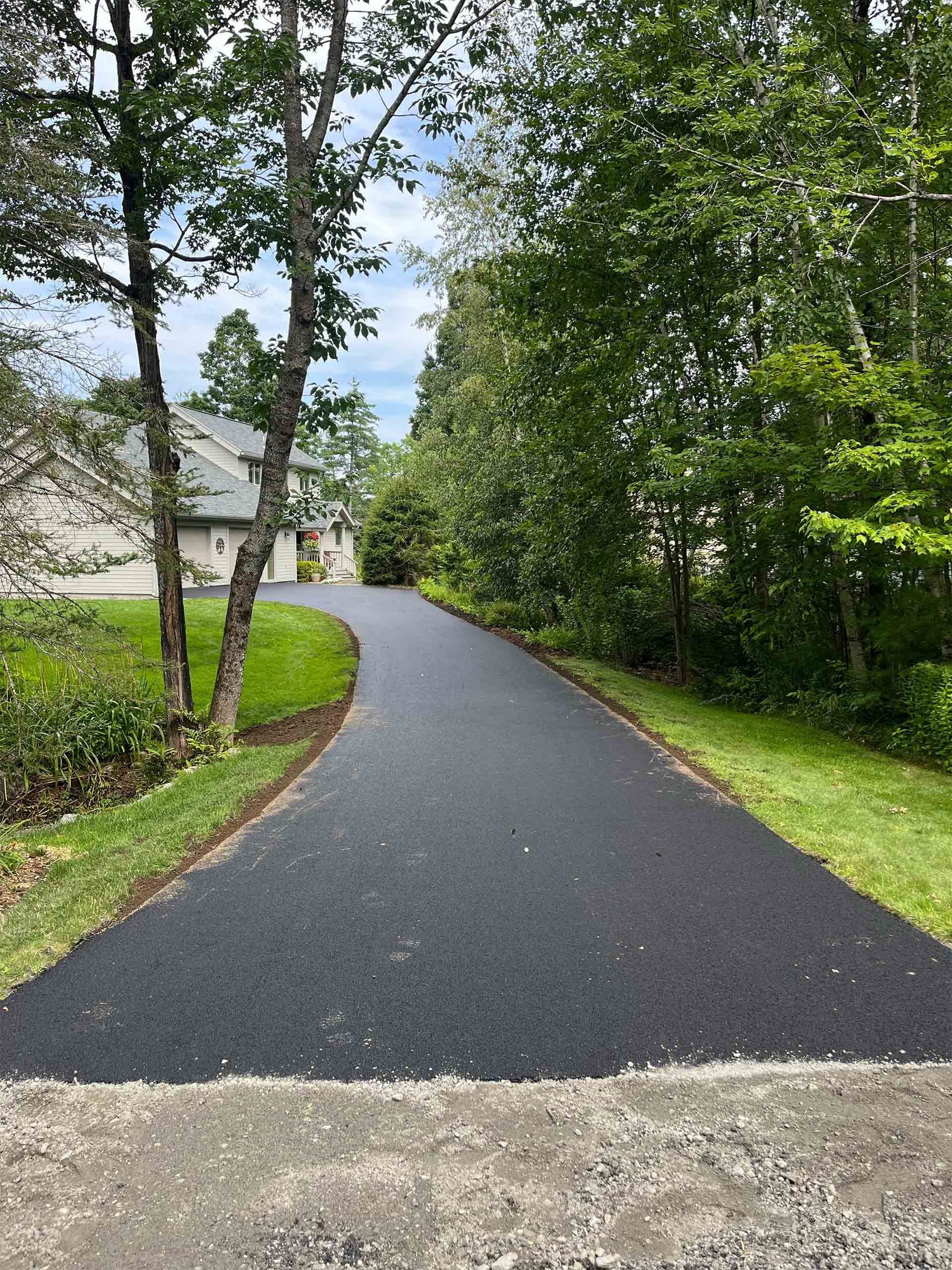
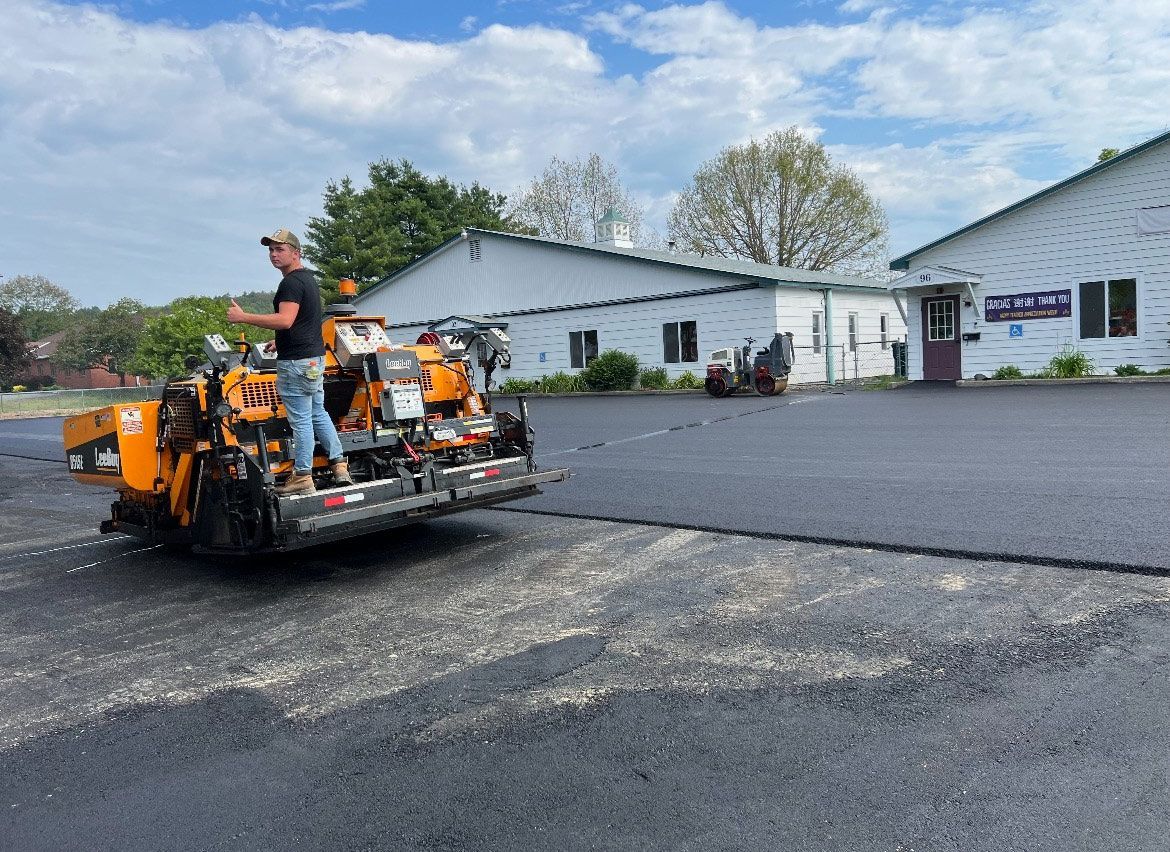
Full replacement means removing the existing asphalt down to the subbase, regrading and compacting the base material as needed, and installing fresh asphalt to the proper depth for your usage. For most residential driveways in New Hampshire, that means at least 2 to 3 inches of compacted asphalt over a well-prepared gravel base. Done correctly, a new driveway installation gives you 20-plus years before you're having this conversation again.
Drainage and Grading: The Invisible Factor
One thing that gets overlooked in the repair-vs-replace discussion is drainage. A driveway that holds water — whether because of improper slope, low spots, or inadequate runoff planning — will continue to degrade regardless of how good the asphalt is. If your existing driveway was installed without proper grading, replacement gives you the opportunity to correct that. Repair doesn't. This is worth factoring in, especially in New Hampshire where standing water in fall becomes ice in winter, and ice is one of the fastest ways to destroy pavement.
Getting an Honest Assessment — What to Expect From a Contractor
The most important step in making this decision is having someone with real field experience walk your driveway and give you an honest read. Not an estimate designed to sell you the most expensive option — an actual assessment. A good contractor will tell you when a repair will hold and when it won't. They'll look at the base, not just the surface. They'll factor in your driveway's age, the type and distribution of damage, and your drainage situation before making a recommendation.
Ask them directly: if I repair this, how long should I expect that repair to last? If the answer is one to two seasons, it's often worth spending the additional money upfront to replace and be done with it. If the answer is five to ten years with proper maintenance, repair is likely the right call right now.
Maintenance After the Decision: Protecting Your Investment Either Way
Whether you repair or replace, the work doesn't end when the crew leaves. Asphalt paving — new or refreshed — needs ongoing care to reach its full lifespan. Sealcoating should be applied roughly six to twelve months after new installation, then repeated every two to three years. Cracks should be addressed as soon as they appear, before water infiltrates. Keeping trees with aggressive root systems away from the edges of a new driveway is worth planning for during installation as well. These small maintenance steps, carried out consistently through proper residential paving services in NH, are what separate a driveway that lasts 15 years from one that goes 28.
If you're standing at that crossroads right now — not quite sure whether your driveway needs a repair, a resurface, or a full replacement — the most useful thing you can do is get a professional set of eyes on it before committing either way. Asphalt Worx has been providing residential paving services in NH for generations, working with homeowners across southern New Hampshire on everything from driveway crack repair and sealcoating to complete new asphalt installations. The team brings the kind of field knowledge that only comes from doing this work across hundreds of real properties in real New England conditions.
Reach out to Asphalt Worx for a free consultation, get an honest assessment of where your driveway actually stands, and make the decision with full information behind it.