Why Smooth Parking Areas Create Better First Impressions for Customers
Most homeowners never think about their driveway until something goes wrong, a crack widens, a pothole forms, or the surface starts crumbling at the edges. By that point, the small preventable problem has quietly become an expensive repair job. Having spent years working on asphalt driveway repair across New Hampshire, I've watched the same pattern repeat itself more times than I can count. The driveway looked fine from a distance, but up close, the signs of neglect were everywhere. What surprises most people isn't the damage itself, it's how avoidable it usually was.
New Hampshire's climate is particularly unforgiving on asphalt. The freeze thaw cycles that run from late fall through early spring, the weight of heavy snowplowing equipment, and summer UV exposure all conspire against even a well installed surface. But here's what I've learned: the climate isn't the primary reason driveways fail prematurely. The real culprit is almost always maintenance that got skipped, delayed, or done wrong.
Ignoring Small Cracks Until They Become Big Problems
A crack in your asphalt driveway isn't just cosmetic damage. It's an open invitation for water, and water is the single most destructive force working against your pavement. When moisture seeps into a crack and then freezes, it expands. That expansion widens the crack, weakens the surrounding asphalt, and begins undermining the base material beneath. Come spring, what was once a hairline fracture is now a jagged gap and the base is already compromised.
The 'It's Just a Small Crack' Mentality
This is probably the most common mistake I see during asphalt driveway repair consultations in New Hampshire. Homeowners rationalize the delay because the crack seems manageable. And it is manageable, when it's small. A crack under a quarter inch wide can typically be sealed with a quality filler and left to perform well for several more seasons. That same crack, left alone through a New Hampshire winter, can evolve into a pothole or a network of alligator cracking that requires a much more intensive repair approach.
The rule of thumb I always share with property owners: if you can fit a quarter into the crack, it's no longer a small problem. Address cracks as soon as you notice them, ideally in late spring or early fall when temperatures are moderate and the asphalt is more receptive to adhesion.
Edge Cracking: The Overlooked Starting Point
Cracks don't always begin in the middle of a driveway. Edge cracking deterioration along the outer borders is extremely common in New Hampshire driveways and often goes unnoticed until it migrates inward. This typically happens when the edges lack proper support, whether from missing border material, vehicle tire tracking too close to the edge, or poor drainage that saturates the soil just beyond the pavement line. Keeping grass and vegetation trimmed back from the driveway edge and ensuring water doesn't pool along the border are two simple habits that prevent a surprising amount of long term damage.
Skipping Sealcoating or Doing It at the Wrong Time
Sealcoating is probably the most misunderstood aspect of asphalt driveway maintenance. Some homeowners skip it entirely, assuming their driveway looks fine without it. Others apply it too frequently, too soon after installation, or during weather conditions that prevent it from curing properly. Any of these approaches leads to surface breakdown that accelerates the need for asphalt driveway repair.
How Sealcoating Protects Your Investment
Asphalt is a petroleum based material that oxidizes over time when exposed to UV light, oxygen, and moisture. This oxidation causes the surface to become brittle and gray, losing the flexibility that makes asphalt durable under traffic loads and temperature swings. Sealcoating applies a protective layer that slows this oxidation process significantly. Think of it like sunscreen for your driveway it doesn't stop aging entirely, but it dramatically extends the surface's useful life.
For a new asphalt driveway in New Hampshire, professionals generally recommend waiting at least six months to a year before applying the first sealcoat. The asphalt needs time to cure and off gas properly. After that initial application, resealing every two to three years is a sound maintenance interval for most residential driveways. Doing it too frequently traps gases and can actually reduce adhesion quality.
Temperature matters enormously during application. Sealcoating should only be applied when daytime temperatures are consistently above 50°F and rain isn't expected for at least 24 to 48 hours afterward. Applying a sealcoat too late in the season a common mistake in our northern climate means the product never fully cures before winter arrives, and you've essentially wasted the application while still leaving the surface unprotected.
Poor Drainage and Water Management Around the Driveway
Water is the most persistent enemy of asphalt pavement, and yet drainage issues around residential driveways rarely get the attention they deserve. When water has nowhere to go, it sits on the surface, along the edges, and eventually beneath the pavement where it softens the base material and triggers the sinking, cracking, and rutting that requires significant asphalt driveway repair work down the road.
Signs That Drainage Is Working Against Your Driveway
Standing water on the driveway surface after rain is one obvious sign, but drainage problems often show up in subtler ways first. Watch for depressions forming in the asphalt surface, particularly in areas where vehicles regularly park or turn. These low spots indicate that the base beneath is losing structural integrity, often because water has repeatedly saturated and weakened it. You might also notice the edges of the driveway beginning to sink or separate from adjacent surfaces another sign that moisture is undermining the foundation.
Correcting drainage problems sometimes means regrading the surrounding landscape to encourage water to move away from the driveway, installing channel drains at low points, or ensuring that downspouts from gutters don't empty directly onto or alongside the pavement. These aren't glamorous projects, but they protect the driveway investment far more effectively than resurfacing a surface that's going to keep failing from underneath.
Why New Hampshire Winters Amplify Every Drainage Flaw
In warmer climates, poor drainage is a nuisance. In New Hampshire, it's genuinely destructive. Water that pools on or around an asphalt driveway in November will freeze and thaw repeatedly over the following months. Each cycle expands the moisture within the asphalt's pores and beneath its base, gradually prying it apart from within. By the time the ground thaws in April, the damage is done cracks, heaving, and depressions that weren't there the previous fall. No amount of patching will fix a surface that keeps getting attacked from below.
Delaying Repairs and Choosing Quick Fixes Over Proper Solutions
There's a certain logic to putting off driveway repairs budgets are tight, the problem seems manageable, or winter is coming and it seems pointless to address things now. The reality, however, is that delay almost always increases the scope and cost of eventual repair. A pothole that could have been patched in an afternoon grows through the winter months and may require base repair by spring. Alligator cracking that starts in one corner can spread across half the driveway if left unaddressed.
I've also seen homeowners reach for DIY cold patch products when a proper asphalt driveway repair is what the situation actually calls for. Cold patch materials have their place they're good for temporary fixes that get you through a season but they're not a permanent solution. They don't bond to the surrounding asphalt the same way hot mix patching does, and they typically start to loosen and crumble within a year or two under normal traffic and freeze thaw conditions. The visible repair may look fine initially, but water infiltration around the patch continues underneath.
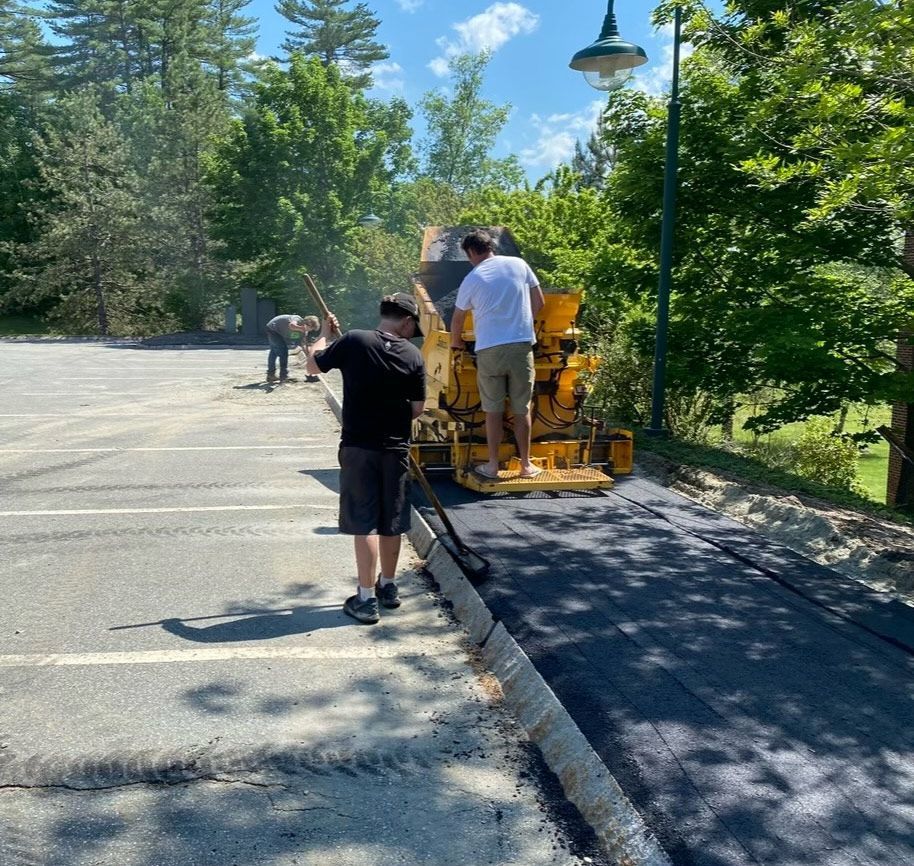
Proper patching, on the other hand, involves cutting out the damaged section cleanly, compacting the base material beneath, and filling with hot mix asphalt that's properly graded and compacted to match the surrounding surface. It's a more involved process, but it produces a repair that can last for years rather than months.
Heavy Loads, Soft Spots, and the Problem of Exceeding Capacity
Residential driveways are designed to handle passenger vehicles and light trucks. They're not engineered to bear the repeated weight of large delivery vehicles, heavy equipment, or construction materials parked in the same location over extended periods. When a surface is consistently overloaded, the asphalt flexes beyond its design limit, and the base material compresses unevenly beneath it. The result is rutting, cracking, and localized depressions that make the driveway both unsightly and unsafe.
During warm summer months, asphalt becomes softer and more pliable. This is actually normal it's part of what gives asphalt its durability over time but it also means the surface is more susceptible to indentation from heavy point loads during peak heat. Things like dumpster placement, scissor jacks used for vehicle work, and even tight vehicle turns during a hot August afternoon can leave permanent impressions if the surface is under load for too long.
Being conscious of what's sitting on your driveway and for how long, particularly during summer heat waves, goes a long way toward preserving the surface between asphalt driveway repair cycles.
A driveway that's properly maintained doesn't just look better it lasts significantly longer and avoids the large scale replacement costs that catch so many homeowners off guard. Whether you're dealing with early stage cracking, recurring potholes, or a surface that's simply showing its age, getting ahead of the problem is always less expensive than waiting.
Asphalt Worx LLC has been handling asphalt driveway repair in New Hampshire for generations, and the team at goasphaltworx.com brings that depth of field experience to every assessment and repair project. If your driveway has been sending warning signs, this is the time to get a professional set of eyes on it before another New Hampshire winter does the deciding for you.